
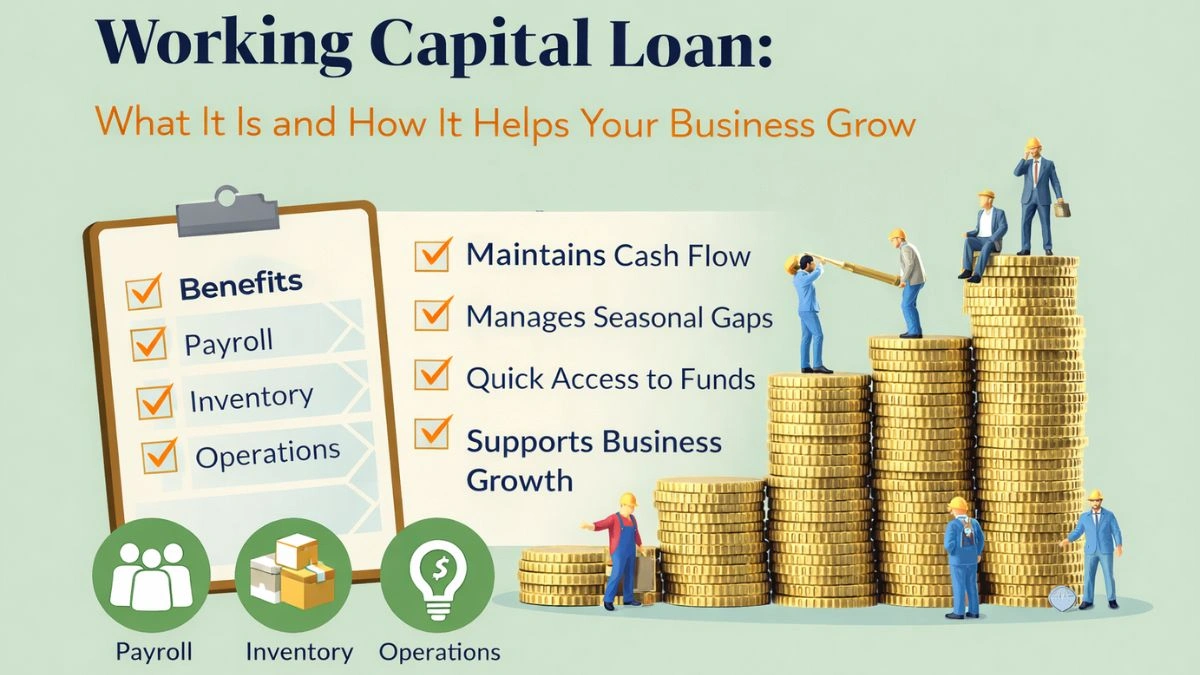
Every business needs cash — not just for big investments like equipment or property, but for day-to-day operations: paying suppliers, managing inventory, covering payroll, or handling seasonal demand. When cash flow gets tight, a working capital loan can be the financial lifeline your business needs.
Working capital loans are specifically designed to help businesses manage short-term needs so you can stay operational and focused on growth.
This article explains what working capital loans are, how they work, their benefits, eligibility, interest rates, and how to choose the right one for your business.
What Is a Working Capital Loan?
A working capital loan is a short-term loan that helps businesses cover everyday operating expenses.
Unlike long-term business loans (used for expansion or big projects), working capital loans are focused on keeping your business running smoothly — especially when cash inflows and outflows don’t line up perfectly.
Use cases include:
- Paying salaries and wages
- Purchasing inventory
- Covering rent and utilities
- Managing seasonal slowdowns
- Handling emergency expenses
- Paying suppliers to avoid delays
Why Working Capital Matters
Working capital = Current Assets − Current Liabilities
It’s essentially the cash a business needs to stay operational on a daily basis. When working capital is low, even profitable businesses can struggle — because money is tied up in inventory, invoices, or delays in payment.
A working capital loan fills this gap.
Types of Working Capital Loans
1. Short-Term Business Loans
Quick funds with shorter repayment periods.
2. Business Line of Credit
Borrow up to a credit limit, pay interest only on what you use.
3. Invoice Financing
Use unpaid invoices as collateral to get funds now.
4. Merchant Cash Advances
Advance against future sales (often repaid as a percentage of daily revenue).
5. Overdraft Protection
A backup balance that you can dip into when needed.
6. Trade Credit
Supplier credit where payment is delayed for a period.
How Working Capital Loans Work
Step 1: Determine Your Needs
Estimate the amount needed to cover short-term expenses.
Step 2: Choose the Right Loan Type
Lines of credit for flexibility, invoice financing for slow receivables, or short-term loans for immediate needs.
Step 3: Apply to a Lender
Submit financial information, business documents, and income evidence.
Step 4: Approval and Disbursal
Depending on the lender, you may receive funds quickly — often within days.
Step 5: Repay According to Terms
Repayment can be weekly, monthly, or tied to sales depending on the type.
Who Offers Working Capital Loans
- Banks – Traditional lenders with structured terms
- Credit Unions – Often lower rates and local business focus
- Online Lenders – Fast approvals and flexible criteria
- NBFCs / Fintech Platforms – Alternative lending with quick access
- Peer-to-Peer (P2P) Lenders – Funded by investor networks
Interest Rates and Costs
Interest rates vary widely based on:
✔ Loan type
✔ Business financials
✔ Credit score
✔ Repayment period
✔ Lender policies
Typically:
- Short-term loans & merchant advances: higher rate
- Lines of credit: interest only on used amount
- Invoice financing: fee based on invoice amount
- Bank term loans: lower rates for established businesses
Always check APR (Annual Percentage Rate), which includes interest and fees, to understand the true cost.
Eligibility Criteria
While it varies by lender, common requirements include:
- Minimum business age (often 1–2 years)
- Stable revenue or cash flow
- Business bank statements
- Good credit profile (business or personal)
- Financial statements or tax returns
Some lenders offer quick options for startups or businesses without long histories — though rates may be higher.
Benefits of Working Capital Loans
1. Smooth Cash Flow
Cover gaps between payments in and out.
2. Immediate Access to Funds
Get approved fast and keep operations running.
3. Flexibility
Use for payroll, inventory, rent — anything your business needs.
4. No Need for Long-Term Commitments
Short-term focus keeps obligations manageable.
5. Build Business Credit
Timely repayment improves your credibility for future funding.
Working Capital Loan vs Term Loan
| Feature | Working Capital Loan | Term Loan |
|---|---|---|
| Purpose | Daily operations | Expansion / big investments |
| Repayment | Short-term | Longer tenure |
| Frequency | Weekly / Monthly | Monthly |
| Cost | Often higher | Usually lower |
| Approval Speed | Fast | Moderate to slow |
Working capital loans are for short-term needs, while term loans support longer-term goals.
Tips to Get a Better Working Capital Loan
✔ Maintain a clean cash flow record
✔ Separate business and personal finances
✔ Improve credit score before applying
✔ Compare interest rates and fees
✔ Apply with accurate documentation
Common Use Cases
Seasonal Businesses
Stock up before peak season without cash strain.
Invoice Payment Delays
Cover operations while waiting for customers to pay.
Emergency Repairs
Fix equipment or address urgent business needs.
Payroll & Salaries
Ensure staff are paid during slow months.
Conclusion
Working capital loans are a practical solution for businesses facing temporary cash strains or short-term financial needs. Whether you’re managing seasonal demand, late payments, or urgent expenses, these loans help keep operations steady — without disrupting long-term planning.
By understanding your needs, comparing lenders, and choosing the right loan type, you can maintain smooth cash flow and position your business for stability and growth.
FAQs About Working Capital Loans
Q1: How fast can I get a working capital loan?
With online lenders, often in a few days. Banks may take longer.
Q2: Can startups get working capital loans?
Yes — some lenders focus on young businesses, though terms may vary.
Q3: Is collateral required?
Not always — many up to unsecured lines of credit or loans exist.
Q4: Can I use working capital loans to buy equipment?
Yes, but term loans or equipment financing may be more cost-effective for big purchases.
Q5: What if I can’t repay on time?
Contact your lender — they may offer extensions or restructuring. Delays can affect your credit and cost more.